
Before work begins
What makes travertine different
Travertine is a natural stone formed with small holes and voids in its structure. Those voids are part of its character, and they also shape how it is installed and maintained. Interior travertine is often sold filled, with the voids filled at the factory, and honed or polished. Exterior travertine is often unfilled or tumbled, with a textured surface. Choosing the right finish for the location is the first decision.
Travertine also varies in color, density, and pattern from piece to piece and lot to lot. Before installation, we review pieces from the batch so the variation is spread intentionally rather than clustered.
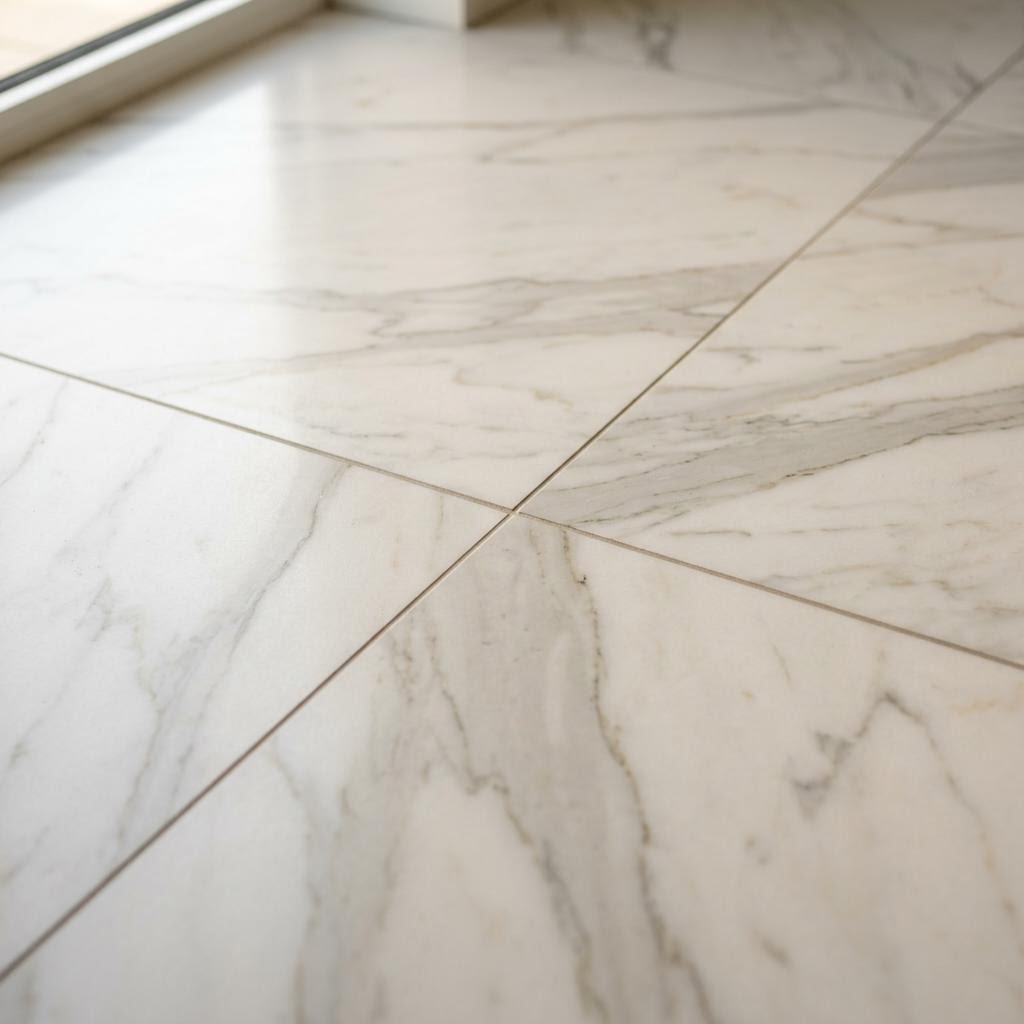
Travertine floors
Interior travertine floors need a sound, flat substrate. Stone tile is often thicker than porcelain and can vary slightly in thickness, so setting methods must allow for that. We check the slab, plan reference lines through connected rooms, and decide where cuts land at doorways and visible walls.
Honed travertine is common for floors because it is less slippery than polished and hides wear better. Polished travertine shows more reflection and scratches.
Patios and pool decks
Outdoors, travertine is often installed as pavers or thicker tiles. Exposure to sun, water, and pool chemicals matters. The stone, setting method, and joints must suit an exterior surface with drainage and movement. Tumbled or textured finishes improve traction on wet surfaces. We review product guidance for exterior and pool deck use, and plan slope so water drains away from the house and pool.
Edges around pools and steps need suitable coping or bullnose pieces, chosen with the pool builder or existing coping in mind.
Travertine showers
Travertine can be used in showers, but it needs filled or sealed surfaces, appropriate setting materials, and a reliable waterproofing assembly behind it. The stone is not the waterproofing. Shower floors need a finish suitable for wet, walked on use. We discuss maintenance, since soap and minerals can build up in a stone shower without regular cleaning.
Layout patterns
Common travertine patterns include straight lay, offset, and the French or Versailles pattern, which uses several tile sizes in a repeating set. Versailles patterns need careful planning to keep the repeat consistent across the room and to avoid awkward cuts at walls. We confirm the pattern set and quantities before ordering.
Filling, sealing, and repair
Even factory filled travertine can have voids that open during cutting or use. During installation, open holes are filled with grout or a matching filler. Sealing helps resist staining, following the sealer manufacturer's guidance; resealing is part of long term care.
Existing travertine can be repaired by filling voids, replacing cracked pieces, and resealing. Matching older travertine is challenging because of natural variation, so spare pieces are valuable. Send photos, the area, the stone you are considering or already have, and how the space will be used.
Grout and joint choices
Travertine is often installed with narrow joints, but the joint width depends on the stone's size consistency and the manufacturer's guidance. Grout color usually blends with the stone so the floor reads as one surface. Sanded and unsanded grouts have different uses, and some stones need specific grouts to avoid staining.
Outdoors, joints may be wider to accommodate movement and drainage. Sealant is used at changes of plane and perimeters.
Transitions and thresholds
Travertine is usually thicker than porcelain and carpet, so transitions to other flooring need planning. At exterior doors, the change from interior filled stone to exterior tumbled stone may happen at the threshold. We plan heights so doors clear and the transition looks deliberate.
Stairs, landings, and steps need edge pieces that suit the stone and provide a clear visual edge.
What to send
Send photos of the area, measurements, the travertine product or supplier, the finish and pattern you prefer, and whether the area is indoor, outdoor, or wet. For pool decks, include photos of the coping and waterline.