
Before work begins
Selecting travertine for interior floors
Interior travertine is often chosen for its warm tones and natural variation. Filled and honed travertine offers a smooth, matte surface, while polished travertine is more reflective. Before installation, we review pieces from the batch for color, veining, and fill, and plan how variation will spread across rooms. Lots differ, so ordering the full quantity from one lot is important.
Thickness can vary slightly between pieces, and travertine is heavier than many porcelain tiles. We check slab flatness and use setting methods that accommodate natural stone.
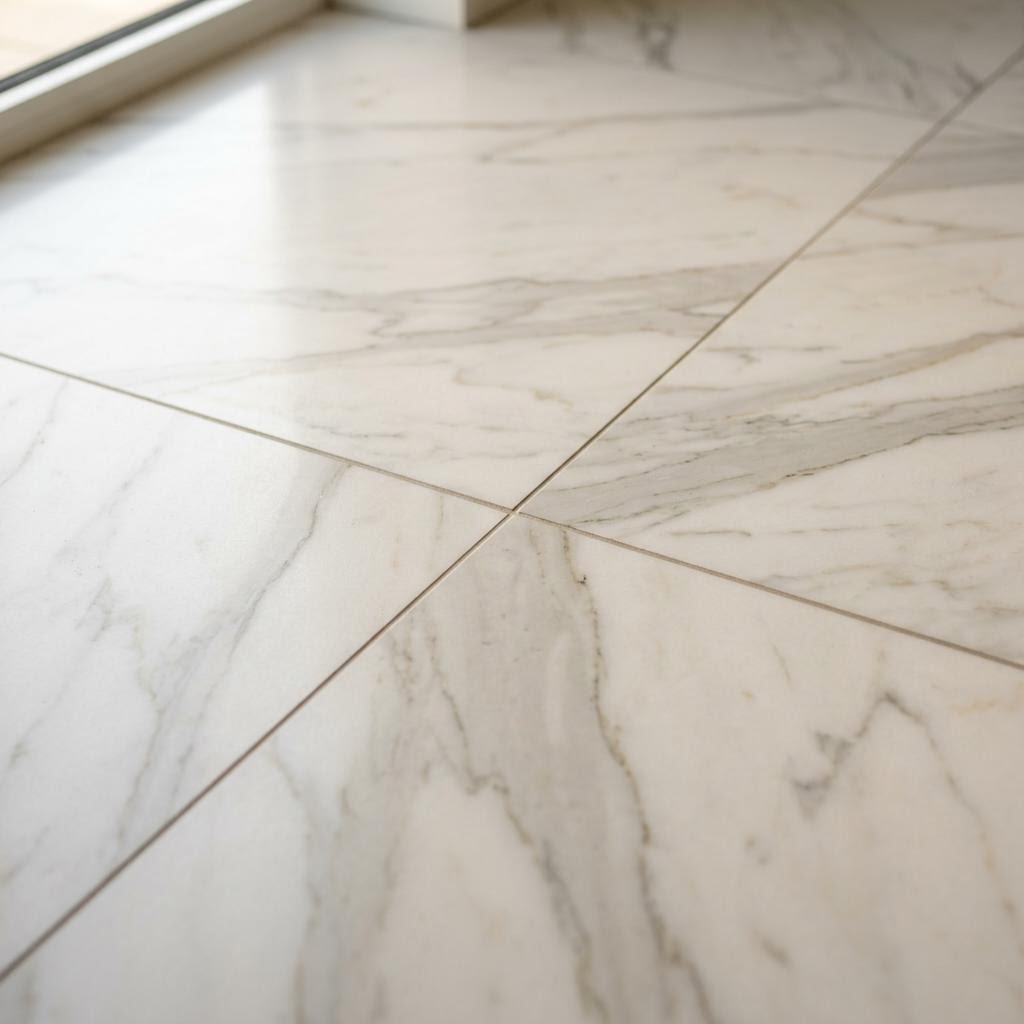
Versailles and other patterns
The Versailles pattern, with several sizes in a repeating set, suits large rooms and outdoor spaces. It requires careful planning so the repeat stays consistent and cuts at walls and doorways are minimized. Straight lay and offset patterns are simpler and work well in hallways or smaller rooms.
Where travertine meets other floors, we plan transitions and finished heights before installation.
Travertine showers and bathrooms
Travertine can bring a natural stone look to bathroom floors and showers. In showers, it needs a filled or sealed surface, compatible setting materials, and a waterproofing assembly behind it. Shower floors need a finish suitable for wet use, often a small format or tumbled mosaic.
Maintenance matters: soap residue and mineral deposits can dull stone. We discuss appropriate cleaners and sealing.
Patios and pool decks
Outdoor travertine is typically tumbled or textured for traction. The base must be sound and sloped for drainage, and movement joints are planned for sun exposure. Coping and steps need suitable edge profiles, coordinated with any pool builder involved.
Filling and sealing
Even filled travertine can have voids that open during cutting. We fill open holes during installation with grout or matching filler. Sealing helps resist staining, and resealing is part of long term care.
Repairing existing travertine
Older travertine may have open voids, cracked pieces, or worn sealer. Repairs include filling voids, replacing damaged pieces, and resealing. Matching older stone is difficult, so spare pieces from the original installation are valuable, and a stone yard may be able to suggest a similar lot. If damage is widespread, replacement may be more practical, with removal handled as part of a new installation. Send photos, the area, and any spare stone you have.
If the existing floor has been polished or honed over time, the surface may differ from new stone. We discuss how repairs will blend.
Coordinating travertine with other finishes
Travertine floors often meet stone fireplaces, wood floors, and plaster walls. Its warm tones can complement or compete with these finishes. Bring samples of nearby materials when selecting stone. If travertine continues from interior to exterior, decide whether you want the same color in different finishes or a contrast at the door.
Baseboard choices matter too. Stone baseboard cut from the same travertine gives a continuous look, while painted wood baseboard creates a clear line between floor and wall.
Large rooms and reference lines
In large rooms, a Versailles or offset pattern needs reference lines that stay square to the main walls and aligned with doorways. We establish those lines before setting so the pattern reads correctly from the entry and main viewing points. Fireplaces and built ins are common focal points, and the pattern should relate to them.
Large rooms also need movement joints at the perimeter and across the field according to industry guidance. Those joints can be colored to blend with the grout.
Living with travertine
Travertine develops a patina with use. Honed and tumbled finishes tend to age gracefully, while polished surfaces show wear patterns sooner. Area rugs, felt pads on furniture, and regular sweeping help protect the surface. Spills from acidic foods should be cleaned promptly, since they can etch the stone.
If you prefer a perfectly uniform look, a porcelain designed to resemble travertine may be worth considering. We can discuss the tradeoffs.